

A first-of-its-kind initiative designed to divert suture packaging waste from landfill and recover valuable materials for recycling.
In collaboration with
%20(80%20x%2040%20mm)%20(1).svg)
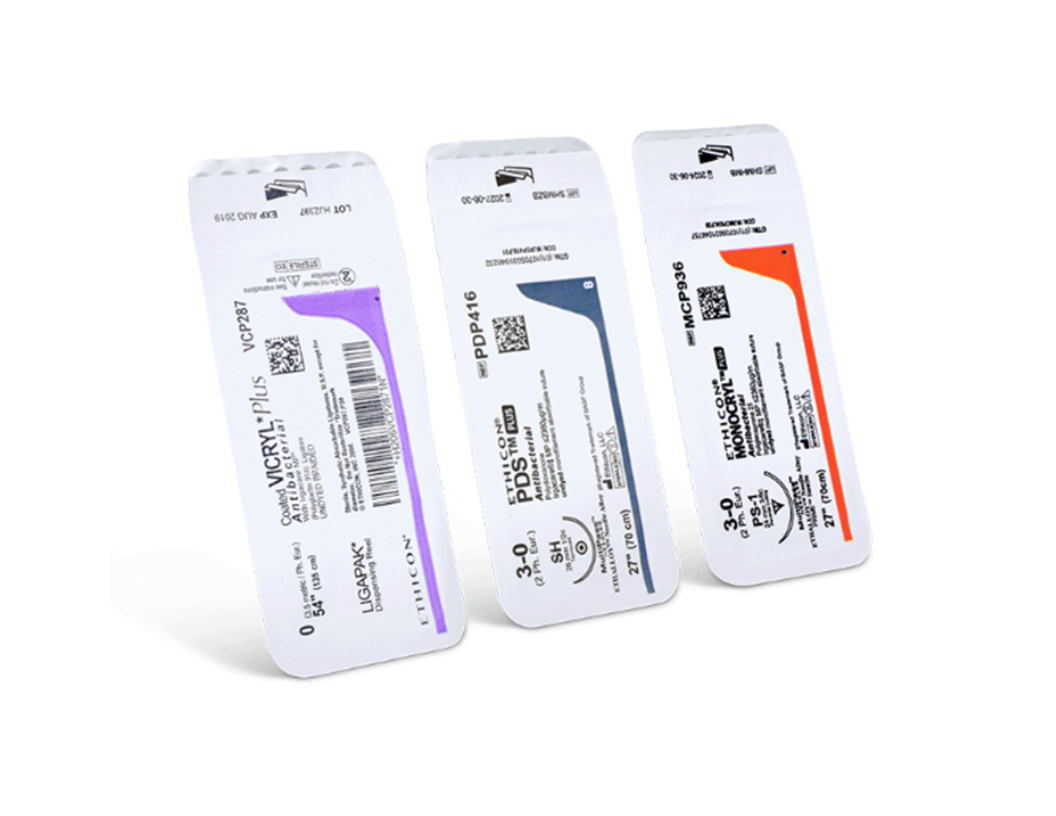
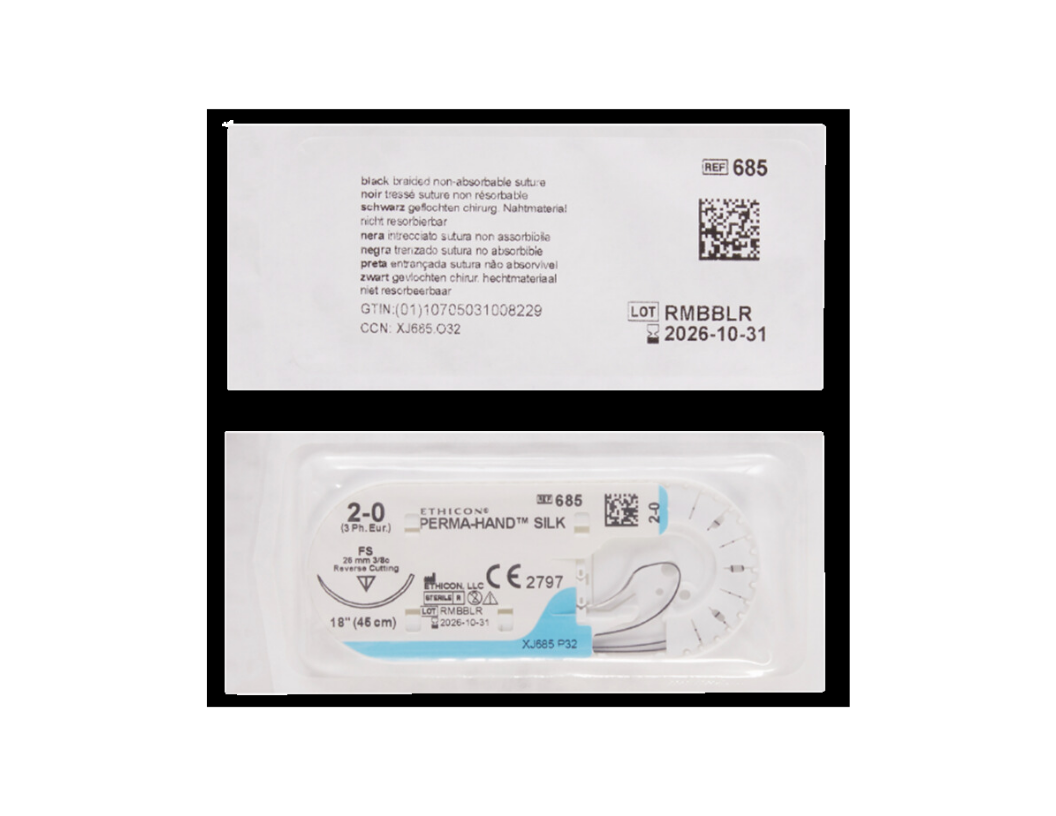
Every year, millions of suture packaging units are discarded in hospitals across Australia, adding to the growing challenge of medical waste. But what if these materials—aluminium foil, soft plastics, rigid plastics, and cardboard—could be recovered and repurposed instead of going to landfill?
The J&J MedTech Suture Packaging Recycling Trial is paving the way for a more sustainable future by testing whether different components of suture packaging can be effectively recycled at scale. By segregating, collecting, and processing these materials separately, the trial will assess feasibility, optimise logistics, and unlock new recycling opportunities for the healthcare sector.
This page provides everything you need to know about the trial—how it works, where the materials go, and the impact we’re hoping to achieve.

For participating hospitals, this serves as an educational resource to ensure staff understand the correct collection process and how to maximise the impact of their participation.
For others interested in this initiative, we invite you to explore the trial details and provide feedback or express interest in being involved in potential future expansions.
This trial is currently limited to three hospitals, allowing us to test feasibility, optimise logistics, and refine the recycling process. If successful, the trial may serve as a foundation for a broader program, expanding to additional hospitals. The trial is fully funded, with no cost to participating hospitals during this phase.
Outer Suture Foil
.svg)
Outer Suture Foil
(Endoloop)
Outer Suture Soft Plastic & Paper
Designed to be easy and manageable for hospital staff, this trial ensures that suture packaging waste is efficiently collected and properly sorted for recycling. With a simple step-by-step process, hospitals can capture valuable materials without disrupting daily workflows.

Specialised, branded collection bins are provided to hospitals and placed in designated areas such as central sterilisation areas. To ensure continuous availability, a buffer stock of empty bins is supplied, allowing for seamless collection and replacement as needed.

Staff place approved single-use surgical devices into the collection receptacle immediately after use. Only devices listed as eligible for reprocessing can be included (see signage or reference materials provided).

When the bin is full, hospital staff must secure the lid using cable ties provided. This ensures the collected devices remain contained and protected during handling and transport. Once sealed, the bin can be moved to the designated holding area for pickup.

When two bins are full, simply schedule a collection via email. Bins are replenished on a one-for-one basis, ensuring hospitals always have a surplus of empty bins for continuous collection and seamless program participation.
Materials collected during the trial are checked-in and them sorted into four key material streams:
Cardboard & Paper
Soft Film Plastic
Rigid Plastic
Aluminium
.jpg)
Cardboard & Paper
Sent to fiber recycling facilities to be processed and turned into new fiber products.
.jpg)
Soft Film Plastic
Sent to plastic recycling facilities to be pelletised and turned into new extruded products such as wheel stops
.jpg)
Rigid Plastic
Processed by Medcycle and turned into building pavers
.svg)
Aluminium
Micronised by Medcycle before being sent to Weston Aluminium to be turned into deoxidant pucks used in steel making
Plastics in healthcare are a major environmental challenge, and the Australian Government has made hospital plastic waste a priority for product stewardship action. This trial is a prime example of industry leadership, with J&J MedTech stepping up to explore real, scalable recycling solutions for medical packaging waste.
Address unavoidable plastic waste – In healthcare, single-use items and sterile packaging are essential for patient safety, but that doesn’t mean they have to end up in landfill. This trial is testing viable recycling pathways to keep these materials in use.
Align with national priorities - This initiative supports the Australian Government’s push for sustainable healthcare waste management and circular economy solutions.
Set a new standard in corporate responsibility - J&J MedTech is leading by example, showing how brands can drive change and take ownership of their environmental impact.
By taking part, you’re not just participating in a recycling trial - you’re part of a movement to transform how plastics are managed in Australian hospitals.